Before I start working on my digipak I thought it will be useful for me to have a look into what digipaks are and what their purpose in.
Digipak is a patented style of optical disc packaging, and is a registered trademark of AGI-Shorewood, an Atlas Holdings LLC company. Digipaks typically consist of a gatefold (book-style) paperboard or card stock outer binding, with one or more plastic trays capable of holding a CD or DVD attached to the inside.
1. Is it unified with the content or message you are trying to get across? This creates an immediate connection and sense of belonging.
2. Is there an information and visual hierarchy? This means there's a focal point or image that grabs your attention first, and then your eye is led around the design in the order of what is important after seeing the main image of reading the main text.
3. Does the design have graphic impact? Is it distinctive or memorable? There are many CDs competing with yours for attention, lots of these are sent out to producers and designers, this means it must be a major contender.
4. Is it appropriate for whom you want to attract and the environment in which it will be presented? A poster or CD for a country audience will not have the same look and feel presentation as for a heavy metal one.
The golden era of cover art design began in the early to mid 1960s and lasted into 1980s. During this time the major format for music was 12 inch, long play disc or LP.Cover art became a part of the musical culture of the time. Often used to express graphically the musician's artistic intent, it helped connect and communicate to listeners the message or underlying theme of the album.
Album cover art, now almost exclusively CD and CD packaging artwork, went through a period of change and rebirth in the 1990s.
Showing posts with label Research. Show all posts
Showing posts with label Research. Show all posts
Tuesday, 5 December 2017

Wednesday, 22 November 2017
Iconic Album Covers
In this blog I will be researching into album covers from the past to analyse and help me understand what makes an artist stand out.
The first album cover I found was David Bowie - Aladdin Sane
:format(jpeg):mode_rgb():quality(90)/discogs-images/R-710502-1416944874-4604.jpeg.jpg) Aladdin Sane is the sixth studio album by English musician David Bowie, released by RCA Records on 13 April 1973. The follow-up to his breakthrough The Rise and Fall of Ziggy Stardust and the Spiders from Mars, it was the first album he wrote and released from a position of stardom.
Aladdin Sane is the sixth studio album by English musician David Bowie, released by RCA Records on 13 April 1973. The follow-up to his breakthrough The Rise and Fall of Ziggy Stardust and the Spiders from Mars, it was the first album he wrote and released from a position of stardom.
Parallel Lines is the third studio album by the American rock band Blondie. It was released in September 1978 by Chrysalis Records to international commercial success. The album reached No. 1 in the United Kingdom in February 1979 and proved to be the band's commercial breakthrough in the United States, where it reached No. 6 in April 1979. In Billboard magazine, Parallel Lines was listed at No. 9 in the top pop albums year-end chart of 1979. As of 2008, the album had sold over 20 million copies worldwide. The album spawned several successful singles, notably the international hit "Heart of Glass".
:format(jpeg):mode_rgb():quality(90)/discogs-images/R-2580199-1327649065.jpeg.jpg)
In a review of post-punk albums from the 1970s, Spin magazine's Sasha Frere-Jones said Parallel Lines may have been "the perfect pop-rock record" and Blondie's best album, while Christian John Wikane from PopMatters called it "a creative and commercial masterpiece by Blondie ... indisputably one of the great, classic albums of the rock and roll era." In the opinion of Pitchfork critic Scott Plagenhoef, the album popularized "the look and sound of 1980s new wave" with classic songs that showcased the depth and complexity of Harry's sexuality and singing. Sal Cinquemani from Slant Magazine was also impressed by her singing, which he felt varied from "purring like a kitten and then building to a mean growl", and cited "Heart of Glass" as the album's best track because of her "honey-dipped vocal".
Parallel Lines was ranked at number 140 on Rolling Stone magazine's list of The 500 Greatest Albums of All Time, number 18 and 45 on NME's 100 Best Albums of All Time and 500 Greatest Albums of All Time respectively, and number 7 on Blender's 100 Greatest American Albums of All Time. Rolling Stone wrote that the album was "where punk and New Wave broke through to a mass U.S. audience". The album was also ranked at number 94 by Channel 4's list of 100 greatest albums of all time. Parallel Lines was ranked the 76th best album of the 1970s by Pitchfork.
The first album cover I found was David Bowie - Aladdin Sane
Aladdin Sane was released in the UK on 13 April 1973. With a purported 100,000 copies ordered in advance, the album debuted at the top of the UK charts and reached No. 17 in America, making it Bowie's most successful album commercially in both countries to that date. The album is estimated to have sold 4.6 million copies worldwide, making it one of Bowie's highest-selling LPs. The Guinness Book of British Hit Albums notes that Bowie "ruled the (British) album chart, accumulating an unprecedented 182 weeks on the list in 1973 with six different titles."
The second I found was Blondie - Parallel Lines
Parallel Lines was ranked at number 140 on Rolling Stone magazine's list of The 500 Greatest Albums of All Time, number 18 and 45 on NME's 100 Best Albums of All Time and 500 Greatest Albums of All Time respectively, and number 7 on Blender's 100 Greatest American Albums of All Time. Rolling Stone wrote that the album was "where punk and New Wave broke through to a mass U.S. audience". The album was also ranked at number 94 by Channel 4's list of 100 greatest albums of all time. Parallel Lines was ranked the 76th best album of the 1970s by Pitchfork.
Thursday, 16 November 2017
Digipak Research
There are well-established industry criteria for every product: logos, posters, CDs, business cards and stationery, advertising and websites. Here are some main criteria to help judge a design success.
1. Is it unified with the content or message you are trying to get across? This creates an immediate connection and sense of belonging.
2. Is there an information and visual hierarchy? This means there's a focal point or image that grabs your attention first, and then your eye is led around the design in the order of what is important after seeing the main image of reading the main text.
3. Does the design have graphic impact? Is it distinctive or memorable? There are many CDs competing with yours for attention, lots of these are sent out to producers and designers, this means it must be a major contender.
4. Is it appropriate for whom you want to attract and the environment in which it will be presented? A poster or CD for a country audience will not have the same look and feel presentation as for a heavy metal one.
The golden era of cover art design began in the early to mid 1960s and lasted into 1980s. During this time the major format for music was 12 inch, long play disc or LP.Cover art became a part of the musical culture of the time. Often used to express graphically the musician's artistic intent, it helped connect and communicate to listeners the message or underlying theme of the album.
Album cover art, now almost exclusively CD and CD packaging artwork, went through a period of change and rebirth in the 1990s.
Tuesday, 14 November 2017
Digipak Tasks
1. Read article - picket points and add to blog.
2. Find iconic covers and analyse and what made it iconic
3. Design brief, hand draw.
3. Design brief, hand draw.
Friday, 6 October 2017
Pseudo Indivuality
Pseudo Individuality
By this Adorno and Horkheimer meant that they way that the culture industry assembled products that made claims to 'originality' but which when examined more critically exhibited little more than superficial differences. An artist who fits this model is Justin Bieber and an artist who doesn't fit this model is Ed Sheeran.
 Justin Bieber fits the model because has always been the typical and conventional pop sensation.
This is because of his catchy music, good looks, love songs and the power to sell songs and albums effortlessly no matter how good or bad the music is. He has sold over 15million albums worldwide, got over 11billion views of YouTube and has sold out many tours and continues to be the conventional pop star.
However, an artist who is very popular and has been very successful despite not being conventional is Ed Sheeran. Unlike Bieber, he is not good looking and his early music was not very catchy or conventional but despite this he became very popular and has been very successful recently. Songs on his first album, +, such as A Team were very slow and not catchy but despite this the song and album grew and grew. However, he is becoming more conventional with regards to his songs with regards to them being more conventional and more catchy. Songs such as Shape of You and Galway Girl are more fast paced and he has collaborated with artists such as Stormzy, who he probably wouldn't have collaborated with in the past. This is in order to sell more albums and make more money.

Monday, 2 October 2017
Adorno and Horkheimer
Culture Industry
Adorno and Horkheimer were German theorists who had several theories on the culture industry. They adopted the term 'Culture Industry' to argue that they way in which cultural items were produced was analogues to how other industries manufactured vast quantities of consumer goods.
The pair argued that the culture industry exhibited on 'assembly line character' which could be observed in the synthetic planned method of turning out its products.
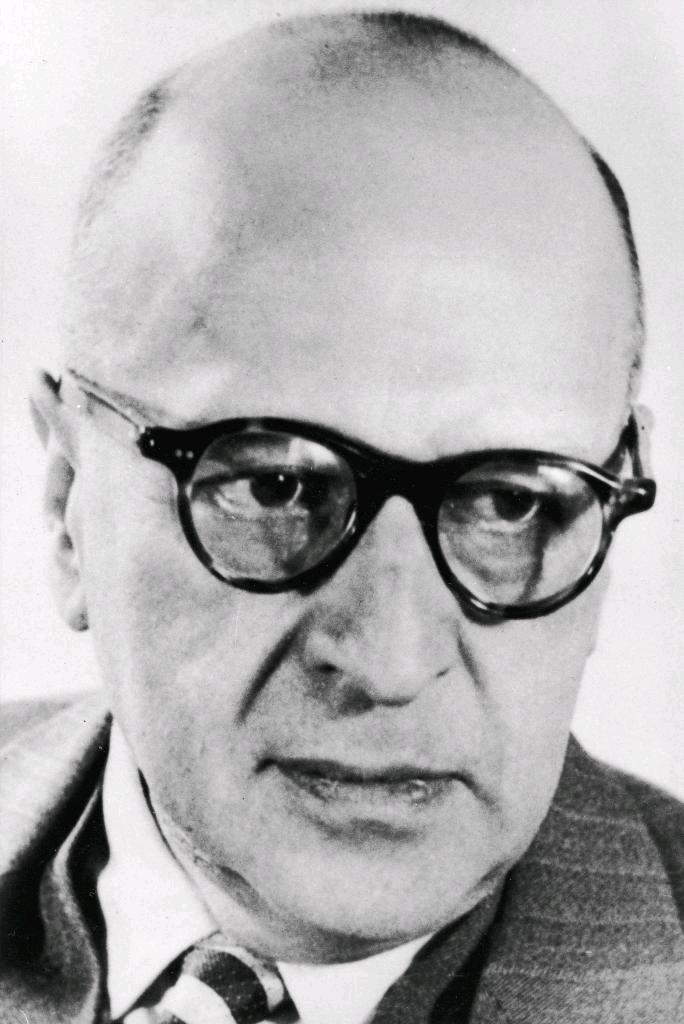
Adorno and Horkiemer linked the idea of the 'culture industry' to a model of 'mass culture' in which cultural production had become a routine, standardised repetitive operation that operation that produced undemanding cultural commodities which in turn resulted in a type of consumption that was also standardised, distracted and passive.
Adorno and Horkeimer
Adorno and Horkheimer linked the idea of the 'culture industry' to a model of 'mass culture' in which cultural production had become a routine, standardised repetitive operation that produced demanding cultural commodities which in turn resulted in a type of consumption that was also standardised, distracted and passive.
This theory was heavily criticised due to people claiming that the theorists were being 'snobby' and trying to take mass culture out of normal culture due to them not liming the culture. This was known as 'cultural elitism'.
The capitalist corporation seems to enjoy an almost omnipotent form of domination and both the consumers and the creative artists are not separate from but are directly connected to this system of production.
Adorno and Horkheimer stressed the structures of economic ownership and control of the means through which cultural products are produced and argued that this directly shapes the activities of creative artists and consumers.
Standardisation- the argument here is that there is nothing spontaneous about the process of cultural production: it has become a routine operation that can be carried out in an office by the application of specific formulae.
This theory was heavily criticised due to people claiming that the theorists were being 'snobby' and trying to take mass culture out of normal culture due to them not liming the culture. This was known as 'cultural elitism'.
The capitalist corporation seems to enjoy an almost omnipotent form of domination and both the consumers and the creative artists are not separate from but are directly connected to this system of production.
Adorno and Horkheimer stressed the structures of economic ownership and control of the means through which cultural products are produced and argued that this directly shapes the activities of creative artists and consumers.
Standardisation- the argument here is that there is nothing spontaneous about the process of cultural production: it has become a routine operation that can be carried out in an office by the application of specific formulae.
Friday, 29 September 2017
Thursday, 28 September 2017
Postmodernism
Postmodernism is the movement in all forms of art where you take something from a previous era and reference it in their piece now. Examples of this in the music industry is when you reference a film or a music video in the current music video but making it a more updated and 21st century version. There are genre styles in the music world and they are;

- Experimental - establishing trends
- Cannon - woks within those trends to fix them and turn them into our cultural understanding
- Postmodern - make fun of these trends with the use of parodies etc.
These references made in the music videos are using intertextuality and this is done to possible appeal and attract a wider audience, therefore giving more awareness and publicity to their music. These references could appeal to a bigger audience because the reference to the older text will give possible nostalgia to the older audiences as well as attracting the younger and current audience.
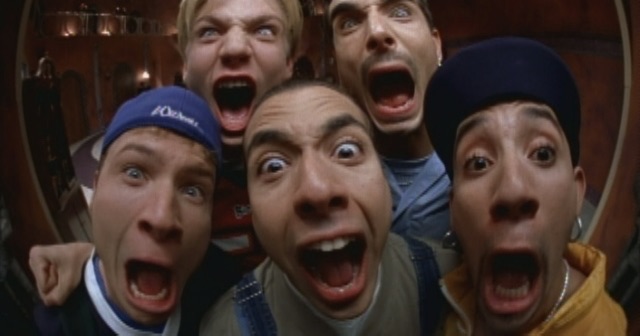
An example of an artist using postmodernism in their song is the Backstreet Boys in their music video for "Everybody". They made several references to Michael Jackson's "Thriller" and this was done through the story of monster figures and how they turned from normal people into different creatures.
Monday, 11 September 2017
Intertextuality
Homage: special honour or respect shown publicly.
The Rutles, originally seen in a TV Mockumentary, pastiche The Beatles. In some cases the pastiche was almost too close for comfort, as in the case of "Get Up and Go", which was almost banned from the soundtrack CD because of its resemblance to "Get Back". Fortunately Paul McCartney saw the joke, to the extent of performing the song himself.
Pastiche: an artistic work in a style that imitates that of another work, artist, or period.
 An excellent example of a music video that uses homage is The Kill by 30 Seconds to Mars. This video uses locations, themes and iconography from the popular classic horror film The Shining. The band perform in a hotel very similar to The Overlook hotel featured in The Shining and the lead singer sits at a typewriter just as Jack Nicholson’s character who is a writer does in the film.
Parody: an imitation of the style of a particular writer, artist, or genre with deliberate exaggeration for comic effect.
A good example of a parody song is Eminem - Lose It. The artist uses make cultural references and makes a mockery of famous celebrities and events in his music video for Lose It.
The Rutles, originally seen in a TV Mockumentary, pastiche The Beatles. In some cases the pastiche was almost too close for comfort, as in the case of "Get Up and Go", which was almost banned from the soundtrack CD because of its resemblance to "Get Back". Fortunately Paul McCartney saw the joke, to the extent of performing the song himself.
Pastiche: an artistic work in a style that imitates that of another work, artist, or period.
 An excellent example of a music video that uses homage is The Kill by 30 Seconds to Mars. This video uses locations, themes and iconography from the popular classic horror film The Shining. The band perform in a hotel very similar to The Overlook hotel featured in The Shining and the lead singer sits at a typewriter just as Jack Nicholson’s character who is a writer does in the film.
Parody: an imitation of the style of a particular writer, artist, or genre with deliberate exaggeration for comic effect.
A good example of a parody song is Eminem - Lose It. The artist uses make cultural references and makes a mockery of famous celebrities and events in his music video for Lose It.
Goodwin's Theory (1992)
1. Music videos demonstrate genre characteristics (e.g. stage performance in rock video, dance routine in pop etc).
2. There is a relationship between lyrics and visuals.
3. There is a relationship between music and visuals.
4. The demands of the record label will include the need for lots of close ups of the artist and the artist may develop motifs which recur across their work (a visual style).
5. There is frequently references t notion of looking (screen within screens, telescopes, etc) and particularly voyeuristic treatment of the female body.
6. There is often intertextual references (to films, TV programmes other music videos, etc)
Development
- The advent of high quality colour video tape recorders and portable video cameras enabled many pop acts to produce promotional videos quickly and cheaply in comparison t the relatively high costs of using film.
- The key innovation in the development of the modern music video was video recording and editing processes along with the development of a number of related effect such as chroma-key and green screen/blue screen.
- Non-representational techniques, in which the musical artist is never shown, became more common
- Many images impossible to grasp on first viewing thus ensuring multiple viewing
- Split screens, colourisation are also commonly used effects
- Most common form of editing associated with the music promo is fast cut montage
Editing
- Through the most common form of editing associated with the music promo is fast cut montage, rendering many of the images impossible to grasp on first viewing thus ensuring multiple viewing, there are videos which use slow pace and gentler transitions to establish the mood.
- This is particularly apparent for the work of many female solo artists with a brand audience appeal, such as Dido.
- Often enhancing the editing are digital effects which play with the original images to offer different kinds of pleasure for the audience. This might take the form of split screens, colourisation and of course blockbuster film style CGI.
- Bitter Sweet Symphony - quick cuts, narrative is a man walking down the street, close up, mid shot, point of view, depth of field
History of Music Videos
- 1965: Bob Dylan Films Subterranean Homesick Blues as a segment for D.A. Pennebaker's film 'Don't Look Back'. This was widely credited as one of the first modern music videos. This is also used as an intertextual reference regularly.
- The invention of film and cinema brought about the possibility of combining music and moving images.
- Advances in technology have turned the music video industry into what it is today but you might be surprised at where it came from.
- Been around since the 1920s. Musicians such as jazz player Bessie Smith first featured in music videos.


Sunday, 10 September 2017
Pop Music TV Shows
- 1970: The record industry discovers TV - this was shown as a great opportunity to promote their artists.
- They focus on producing short 'Promos', early music videos which started to replace the lure performance of the artist on the TV stage.
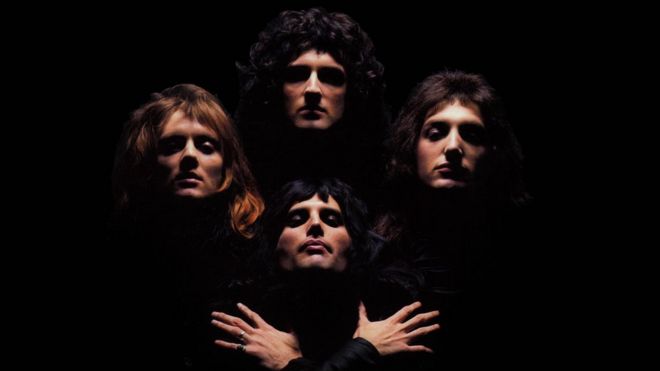
- 1975: Bohemian Rhapsody, a groundbreaking video released by Queen, marked the beginning of the video era and set the language for the modern music video. The video is considered one of the first to use advanced visual effects. Special effects played a vital role in propelling this video forward.
Monday, 17 July 2017
Technical Codes
Previously in a lesson we went through what technical codes are and how they are used. This is what I took notes on;
Cinematography- Camera movements may accompany movement of performers (walking/dancing) but it may also be used to create a more dynamic feel to stage performance. For instance constantly circling the band as they perform on stage. The close up does predominate, as in most the. Partly because of the size of the screen and partly because of the desire to create a sense of intimacy for the viewer. It also emphasised half of the commodity on scale, not just the song, but the artist and particularly the voice. Editing - through the most common form of editing associated with the music promo.
Editing- The most common form of editing is fast cut montage, rendering many of the images impossible to grasp on first viewing. This ensures multiple viewing, however there was also slow paced and gentler transition, which were used to establish mood. Often enhancing the editing are digital effects which play with the original images to offer different kinds of pleasure for the audience. This might take the form of split screens, colourisation and of course blockbuster film style CGI.
Cinematography- Camera movements may accompany movement of performers (walking/dancing) but it may also be used to create a more dynamic feel to stage performance. For instance constantly circling the band as they perform on stage. The close up does predominate, as in most the. Partly because of the size of the screen and partly because of the desire to create a sense of intimacy for the viewer. It also emphasised half of the commodity on scale, not just the song, but the artist and particularly the voice. Editing - through the most common form of editing associated with the music promo.
Editing- The most common form of editing is fast cut montage, rendering many of the images impossible to grasp on first viewing. This ensures multiple viewing, however there was also slow paced and gentler transition, which were used to establish mood. Often enhancing the editing are digital effects which play with the original images to offer different kinds of pleasure for the audience. This might take the form of split screens, colourisation and of course blockbuster film style CGI.
Subscribe to:
Posts (Atom)

-
DAZE The name of our artist is DAZE and his real name has not yet been revealed by the artist. He is 16 years old and is from South E...
-
 This is our finished Digipak for our music project. We have changed many fonts and had many different pictures to choose from but as a g...

